Aluminum Foundry: Marine Performance Benefits
Wiki Article
Why Aluminum Shop Castings Support Better Warm Dissipation in Industrial Equipment
Light weight aluminum foundry spreadings play a vital function in improving heat dissipation within industrial systems. Their remarkable thermal conductivity allows for reliable heat transfer, while their lightweight nature boosts functional performance. Additionally, progressed spreading techniques make it possible for complex styles that enhance thermal management. These features collectively add to much better efficiency and power cost savings. Understanding the complete influence of these homes calls for a closer evaluation of their various applications and benefits in industrial settings.Extraordinary Thermal Conductivity of Light Weight Aluminum
Aluminum is renowned for its extraordinary thermal conductivity, making it a preferred product in numerous applications. This home makes it possible for light weight aluminum to efficiently transfer heat, which is essential in industries that depend on efficient heat administration. The high thermal conductivity of light weight aluminum enables it to dissipate heat promptly, reducing the risk of overheating in systems such as engines, electronic devices, and heat exchangers.Additionally, light weight aluminum's thermal efficiency adds to boosted efficiency and power savings in numerous industrial procedures. When used in factory castings, light weight aluminum can be formed into detailed forms that boost warm dissipation additionally. This capacity is especially beneficial in applications requiring quick air conditioning or temperature level guideline.
Light-weight Nature of Light Weight Aluminum Castings
The light-weight nature of light weight aluminum castings uses considerable advantages throughout numerous markets, particularly in applications where minimizing weight is essential. This attribute improves functional performance, as lighter parts add to decrease energy consumption throughout transportation and handling. In auto manufacturing, as an example, the reduction in overall lorry weight can cause boosted fuel performance and enhanced performance. In a similar way, in aerospace applications, the decline in weight is essential for achieving optimal flight efficiency and gas cost savings.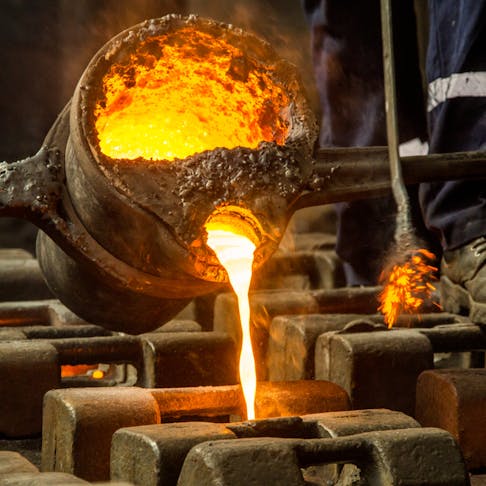
Improved Layout Versatility for Heat Monitoring
Style versatility in warm administration is a vital attribute of aluminum spreadings that permits designers to optimize thermal performance in numerous applications. Metal Casting. The convenience of aluminum allows the production of complex geometries and customized styles, which are essential for reliable warm dissipation. This adaptability promotes the integration of cooling networks, fins, and various other functions that boost thermal transfer in industrial systemsMoreover, the capability to generate lightweight components without endangering architectural honesty enables for ingenious styles that can efficiently handle warm in constrained areas. By leveraging sophisticated spreading strategies, designers can make improvements the thermal residential or commercial properties of aluminum castings to fulfill certain functional needs. This level of customization not only enhances performance however additionally adds to energy effectiveness, ultimately bring about minimized operational prices. In this method, light weight aluminum spreadings act as a substantial resource for industries seeking enhanced warm monitoring solutions.
Resistance to Rust and Oxidation
Effective warm administration is often challenged by ecological elements, particularly deterioration and oxidation. Aluminum factory castings show exceptional resistance to these problems, making them an excellent choice for industrial systems. The natural formation of a safety oxide layer on light weight aluminum surfaces assists avoid additionally destruction, making sure the integrity of components gradually. This fundamental resistance permits light weight aluminum castings to keep their thermal and architectural buildings also in rough atmospheres, where exposure to wetness, chemicals, and differing temperatures can cause considerable wear in various other products.The lightweight nature of light weight aluminum, incorporated with its rust resistance, contributes to the longevity of commercial applications. This toughness decreases the frequency of replacements and maintenance, ultimately sustaining effective warm dissipation. Subsequently, aluminum factory spreadings are not only useful for their thermal buildings however also for their capability to hold up against oxidative and destructive challenges, ensuring peak performance in demanding setups.
Cost-Effectiveness and Energy Performance
The cost-effectiveness and power effectiveness of light weight aluminum foundry castings present considerable benefits for suppliers. By lowering manufacturing prices and using energy savings, these castings represent a functional choice for companies intending to maximize their procedures. In addition, the long-lasting financial investment worth related to aluminum castings enhances their allure in an affordable market.Lower Production Expenses
While several markets face increasing production expenses, aluminum factories have increasingly transformed to innovative approaches to improve cost-effectiveness and energy effectiveness. Making use of aluminum for foundry spreadings uses significant advantages, as it needs much less power to create compared to various other steels. Furthermore, aluminum's light-weight nature minimizes transportation prices and simplifies handling during making procedures.Employing advanced spreading strategies, such as die casting and lost foam casting, can further simplify manufacturing and reduce waste. Metal Foundry. These modern-day techniques not only lead to faster turn-around times however additionally allow for the efficient use of basic materials. Consequently, light weight aluminum shops are much better positioned to keep competitive prices, inevitably benefiting markets reliant on top quality spreadings for their procedures
Energy Savings Perks
Energy savings represent an important advantage for aluminum foundries, especially in the context of cost-effectiveness and power performance. The lightweight nature of light weight aluminum enables lowered power consumption during production and transport processes. Furthermore, aluminum spreadings show remarkable thermal conductivity, allowing effective heat dissipation in commercial systems. This effectiveness decreases the requirement for substantial cooling mechanisms, causing lower power prices in the future. The sturdiness and longevity of aluminum castings reduce the regularity of substitutes, contributing to total power savings in production cycles. By integrating light weight aluminum shop spreadings, sectors can achieve significant reductions in energy expenditure while improving functional my explanation effectiveness, making it a critical choice for cost-conscious makers seeking sustainable remedies.Long-Term Financial Investment Value
Investing in light weight aluminum shop castings provides significant long-lasting worth, especially concerning cost-effectiveness and energy effectiveness. These spreadings not only improve warmth dissipation but likewise contribute to general system performance, bring about decreased functional costs. The light-weight nature of aluminum allows for easier handling Discover More and transportation, minimizing logistical expenditures. In addition, aluminum's longevity guarantees a much longer lifespan, decreasing the requirement for regular substitutes. Reliable warm management equates into lower energy usage, which can considerably reduce energy expenses over time. In addition, business can benefit from enhanced efficiency as systems run better. Ultimately, the preliminary financial investment in light weight aluminum factory spreadings returns significant returns, making them a wise selection for industries intending to optimize efficiency while controlling costs.Applications of Light Weight Aluminum Foundry Castings in Sector
Aluminum shop castings play a pivotal duty in different commercial applications as a result of their unique residential properties, including light-weight design and outstanding thermal conductivity. These castings are extensively used in the auto field for engine blocks, transmission cases, and warmth exchangers, where effective warmth dissipation is essential for efficiency and security. In the aerospace sector, light weight aluminum castings add to the decrease of aircraft weight, consequently boosting fuel efficiency and general airplane performance. In addition, in the electronics industry, aluminum spreadings are used in warm sinks and enclosures, promoting effective thermal management in gadgets. The adaptability of light weight aluminum shop castings reaches manufacturing equipment components, where durability and resistance to corrosion are essential. Generally, the applications of aluminum factory spreadings span several sectors, emphasizing their relevance ahead of time technology and improving operational efficiency.
click to investigate

Often Asked Inquiries
How Do Light Weight Aluminum Castings Compare to Other Products for Heat Dissipation?
Aluminum spreadings usually outshine lots of various other products in warm dissipation because of their outstanding thermal conductivity. Contrasted to steel or plastic, aluminum effectively transfers warm, making it a recommended selection for commercial applications needing reliable thermal monitoring.What Is the Life Expectancy of Aluminum Shop Castings in Industrial Applications?
The lifespan of aluminum factory castings in industrial applications generally varies from 10 to three decades, depending on environmental conditions, upkeep, and operational anxieties, making them a long lasting choice for different commercial requirements.How Do Temperature Variations Affect Aluminum Casting Performance?
Temperature level variants can greatly impact aluminum casting efficiency, leading to thermal expansion or tightening. These variations might cause warping, stress cracks, or modified mechanical buildings, inevitably influencing the durability and dependability of the actors parts in commercial applications.Can Light Weight Aluminum Castings Be Recycled After Their Life Cycle?
Yes, aluminum spreadings can be recycled after their life cycle. The recycling procedure retains the steel's buildings, making it a sustainable selection for different applications, consequently reducing waste and saving sources in commercial operations.What Surface Area Treatments Enhance Light weight aluminum's Warm Dissipation Characteristics?
Surface area therapies such as anodizing, paint with thermally conductive finishings, and using heat sinks significantly enhance light weight aluminum's warm dissipation residential or commercial properties. These approaches enhance area and thermal conductivity, enhancing efficiency in numerous industrial applications.Aluminum shop spreadings play a vital role in boosting heat dissipation within commercial systems. When utilized in shop spreadings, aluminum can be built into elaborate shapes that improve heat dissipation further. Style flexibility in warm monitoring is a crucial feature of aluminum spreadings that allows engineers to maximize thermal performance in different applications. By leveraging innovative casting strategies, engineers can adjust the thermal residential properties of light weight aluminum spreadings to fulfill particular functional requirements. Furthermore, light weight aluminum castings show exceptional thermal conductivity, allowing reliable warm dissipation in industrial systems.
Report this wiki page